Moderation Limits on Unfiltered Platforms
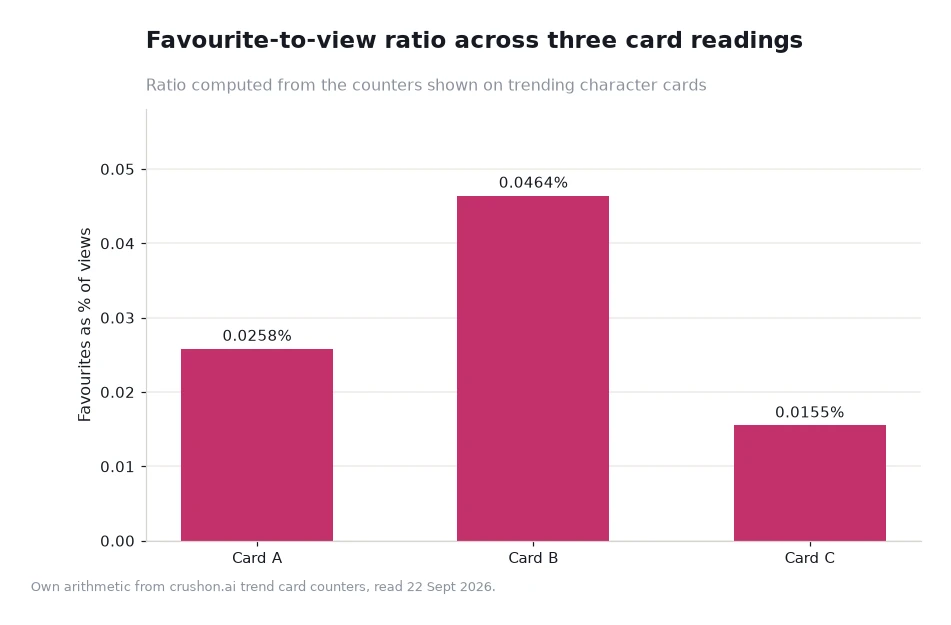
"Unfiltered" describes what the shelf does not screen out, not an absence of rules. This platform's own FAQ answers the question directly: some limitations apply in accordance with its content and community guidelines. That single sentence is the difference between an unfiltered product and an unmoderated one, and it is worth knowing which you are using. On the three card readings used here, favourites ran 0.0258%, 0.0464% and 0.0155% of views - a shelf read by many, kept by few, and governed in writing.

Key takeaways
- Unfiltered is a browsing setting, not a legal position: the platform states that some limitations apply under its content and community guidelines.
- The three filters - Filtered, Unfiltered and 18+ - sit alongside those guidelines rather than replacing them.
- Reporting has a published route: from the content item itself, with a written address for reports that do not fit that route.
- Read a shelf with the guideline in mind: 20 cards reviewed at 45 seconds each is 15 minutes, and it is the only review you need before choosing.
What the guidelines actually bound
An unfiltered setting removes an aesthetic or topical screen. It does not remove the platform's own rules, and the FAQ is explicit about which framework applies: some limitations apply in accordance with the content and community guidelines. Read that as a description of the sort of product this is - a text platform that hosts a wide range of character material while still drawing lines it will not cross.
The second published boundary is factual rather than topical. The 2257 statement says the content is AI-generated text, that no real person is depicted and that the site does not produce images or video. That is a limit on what the material can be, which is a different kind of moderation from a rule about subjects. Between the two you get a fairly precise picture: a wide shelf of generated text, with published guidelines over the top and no photographic or filmed material underneath.
The third boundary is procedural and it is the one readers use most often. The content removal policy sets out how to report something from the content item itself, and names an address for reports that do not fit that route. The complaints policy covers how a complaint is handled. A platform that offers both a topical rulebook and a working reporting route is doing the thing that "unfiltered" sceptics assume it does not.
Unfiltered, Filtered and the 18+ gate
The three filters are the clearest statement of how the platform thinks about scope. Filtered narrows what you see, Unfiltered widens it, and 18+ marks the adult gate that the whole product sits behind. The wording matters because it tells you that unfiltered is a mode inside the product rather than the product's definition, and modes can be switched without the guidelines changing.
For a reader the practical consequence is that a disappointing card is usually a filtering decision rather than a moderation failure. If a description does not match what you expected, the cause is most often a tag choice; if the copy promises something outside the guidelines, that is when the reporting route is the right instrument rather than a shrug.
It is also worth being precise about the word "restriction". The FAQ's answer is not a warning to readers, it is a statement about editorial scope - the platform will not host everything, and it says so before you go looking. That honesty is a feature you can plan around: it means the shelf you browse has been drawn deliberately, and the counters on each card are the record of how other readers responded to that drawing.
| Limit | Published source | What it means for a reader |
|---|---|---|
| Content and community guidelines | The FAQ answer on restrictions | Unfiltered is a browsing setting, not an absence of rules |
| Content type | The 2257 statement: AI-generated text, no real person, no images or video | The material is text by definition, not photographed or filmed |
| Reporting route | The content removal policy | Any specific card can be flagged from the item itself |
| Complaint handling | The complaints policy | There is a defined process for issues that are not about one card |
| Adult gating | The 18+ filter and the 2257 page | The product is offered to adults rather than to a general audience |
Worked example: reviewing a shelf under the guidelines
Take the read itself first, since it is the only routine part of this. Twenty cards at about 45 seconds each - description, tags, creator credit - is 15 minutes, and that is the whole review. Nothing in the guidelines requires more of a reader than noticing whether a card's promise matches what the platform says its material is.
Then the counters, which describe how the shelf performs rather than how it is governed. Favourites divided by views came to 0.0258%, 0.0464% and 0.0155% across three readings, a threefold spread from the lowest to the highest, with one reading matching a published pair exactly: 4.7K favourites against 18.2M views is 0.0258%. Read those numbers as evidence of attention, not of approval or of compliance.
The minutes and percentages are illustrative except the counters, which were read on 22 Sept 2026. The useful habit is to keep the two ideas separate: the guidelines tell you what the shelf can contain, and the counters tell you what other readers did with it. A card can have an excellent keep rate and still be a poor choice for you, and no set of rules resolves that.
Using the rules instead of arguing about them
Three habits follow from all of this. Read the FAQ answer on restrictions once, so you know the framework rather than a forum's version of it. Keep the report route available, because the platform's own adult pages describe the mechanism as a per-item report with a written fallback - the Crushon page for ai porn chat is where the restriction sentence quoted above appears, and the policy pages are one click further on.
Then treat the guidelines as a reason to read descriptions more carefully rather than less. On a shelf with a wide remit, the description and the tag row are the only tools that tell you what a card is for, and a reader who checks both spends fewer messages finding out. The FAQ on the platform's adult product page is where the restriction sentence quoted above appears, and it uses the platform's own term, Porn Chat AI, in the answer about restrictions. The content removal policy matters precisely because it makes that ordinary reading safe: if something on a shelf is genuinely outside the frame, there is a defined way to say so.
Finally, stop expecting the word "unfiltered" to mean one thing. It is a marketing word and a filter label at the same time, and the only version that carries any weight is the one the platform states in writing. Two sentences, one in the FAQ and one on the 2257 page, describe this product more accurately than any adjective on a homepage.
Frequently asked questions
Does unfiltered mean there are no content rules?
No. The platform's FAQ states that some limitations apply in accordance with its content and community guidelines, and those guidelines apply alongside every filter setting.
How do I report something on an unfiltered shelf?
Use the report option on the content item itself. The content removal policy also gives an address for reports that do not fit that route, and the complaints policy covers process.
Is anything excluded by the platform's own definition?
By its own statement the material is AI-generated text depicting no real person, and the site does not produce images or video. That is a limit on content type rather than on subjects.
Learn the frame, then browse freely
Read the FAQ restriction answer, the content removal policy and the complaints policy once - about ten minutes in total - and keep the report route somewhere you can find it. Then browse as normal, checking descriptions and tags rather than waiting for rules to make the choice for you. The frame is short enough to learn in one evening, and knowing it means the word "unfiltered" stops being ambiguous the moment you meet it again on another platform.
Data: the platform's FAQ answer on restrictions, the content removal and complaints policies, the 2257 statement and trending card counters, read 22 Sept 2026[1]. Review times and percentages are own arithmetic shown as an illustrative profile, not platform data. Written for an adult readership; the service is offered to readers aged 18 and above.